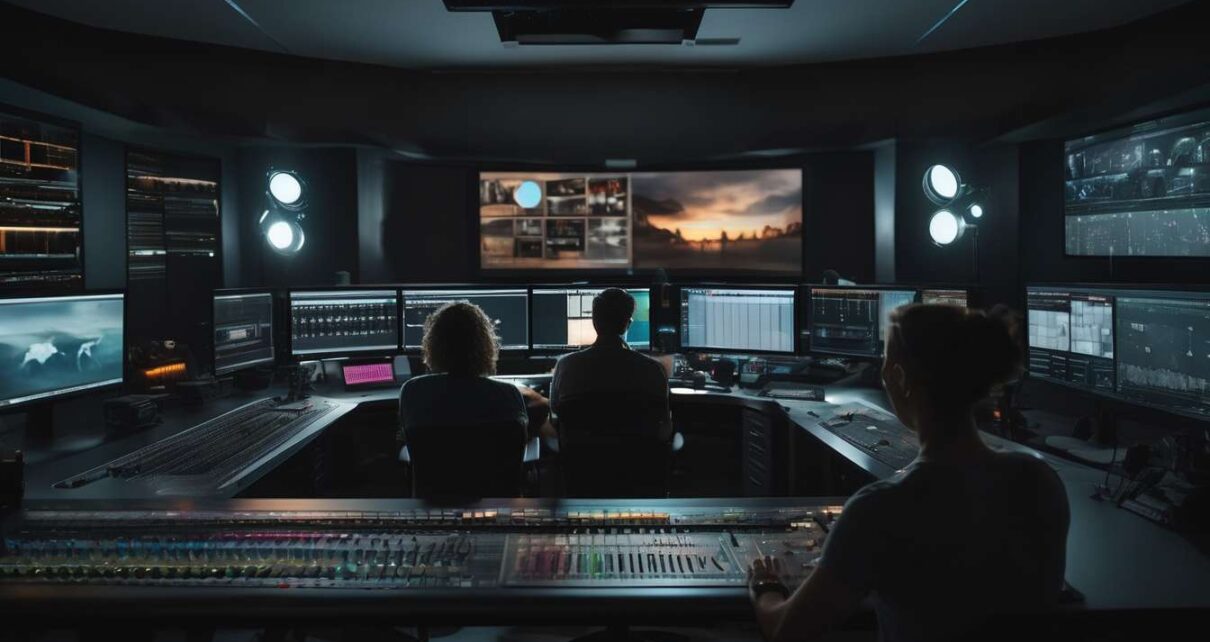
Hands like clockwork and voices like cues — “the camera never blinks” is a refrain that guides our rethinking of studio operations to meet modern adult media expectations.
We use a living-organism metaphor: departments are organs, workflows are circulatory systems, and consent, safety, and technology are the nervous system that keeps everything responsive.
We prioritize transparent communication, rigorous health protocols, and flexible scheduling to support performers and crew alike.
We integrate scalable technology and design:
- Data-driven marketing
- Encrypted content delivery
- Modular set designsThese allow the operation to grow or contract without losing integrity.
We confront legacy practices honestly:
- Replace exploitation with partnership
- Replace ad-hoc fixes with documented standards
We reshape operations and metrics:
- Restructure budgets
- Retrain managers
- Reframe success metrics to value longevity over quick hits
Together, we are rebuilding studios that sustain creative freedom while meeting ethical, legal, and audience expectations for the present and the future.
Governance and Accountability
We’re strengthening governance and accountability to ensure transparent decision-making, clear responsibility lines, and consistent enforcement of industry and legal standards.
We set up clear roles and decision pathways so everyone knows who’s responsible for what, and we’ll hold those roles to consistent standards.
We’re implementing consent-management protocols that document permissions and make review straightforward.
- Train teams to follow consent protocols reliably.
- Maintain auditable records of permissions and reviews.
We’re reinforcing data-security practices to protect personal and project information.
- Limit access based on role and need-to-know.
- Audit changes and maintain logs.
- Respond quickly to security incidents.
We’re prioritizing performer-wellbeing by embedding health, scheduling, and feedback responsibilities into job descriptions and oversight processes.
We’ll regularly review performance against agreed policies and invite contributors to participate in governance reviews so their perspectives shape outcomes.
We want people to feel they belong to a system that’s fair, accountable, and protective.
- Publish clear reporting lines and update policies transparently.
- Provide accessible channels for concerns and responsive enforcement.
- Ensure the community can trust that standards are applied consistently and responsively.
Consent and Safety Systems
We’ll build clear, auditable systems that record permissions, enable rapid safety responses, and make it easy for performers and staff to update or revoke consent.
-
Adopt a consent-management framework that logs:
- time-stamped agreements,
- scoped permissions,
- version history.
-
Train teams to act on alerts and escalate safety issues immediately, with:
- predictable, compassionate responses,
- documented procedures that reinforce trust.
We’ll protect personal information with strict data-security measures and make consent management transparent and easy.
-
Data-security controls
- encrypted storage,
- least-privilege access,
- regular audits.
-
Transparent policies and simple interfaces
- empower contributors to manage approvals and withdrawals,
- minimize gatekeeping.
-
Incident handling
- clear incident reporting channels,
- independent review,
- restoration pathways when errors occur.
We’ll center performer wellbeing by making consent ongoing, revocable, and dignity-respecting, and by building a culture of measurable accountability.
-
Ongoing consent practices
- regular re-checks of permissions,
- easy revocation workflows,
- support resources for performers.
-
Culture and measurement
- create practical metrics for belonging, accountability, and safety,
- embed those metrics into studio practices so commitments are verifiable rather than slogans.
Health and Wellbeing Protocols
We will establish clear, evidence-based health and wellbeing protocols that prioritize preventive care, mental health support, and rapid medical response for everyone on set.
We will create standardized screening, vaccination, and hygiene practices guided by medical professionals so performers and crew can trust the environment.
We will integrate consent-management into health workflows to ensure boundaries and testing choices are respected, documented, and revisitable.
We will provide on-call clinicians, confidential counseling, and peer-support networks so no one feels isolated; these services are normalized and easily accessible.
We will maintain rigorous data-security around medical records and counseling notes, limiting access and using encrypted systems to protect privacy while allowing necessary medical continuity.
We will run regular training sessions, clear incident response steps, and simulated drills so everyone is prepared for health emergencies without added stress.
We will measure performer wellbeing through anonymous surveys and objective health metrics, then act on results transparently.
By centering care, confidentiality, and community, we will cultivate a workplace where everyone belongs and can perform confidently, safely, and with dignity.
Flexible Scheduling Models
We will implement flexible scheduling models that balance performers’ availability, rest needs, and production demands.
Key mechanisms:
- Advance booking windows so performers can plan.
- Shift caps to prevent excessive hours.
- Real-time swap systems that allow quick adjustments.
Schedules will be designed so each team member can see openings, request swaps, and set hard limits.
Features for users:
- A visible list of available slots.
- A request workflow for swaps and pickups.
- Enforceable hard limits so no one exceeds agreed hours.
Performer wellbeing is prioritized by embedding mandatory rest intervals and opt-out windows into booking flows.
Operational safeguards:
- Mandatory minimum rest between shifts.
- Opt-out/blackout windows that prevent booking during blocked times.
- Training for coordinators to honor boundaries without pushback.
Our approach fosters belonging by making it easy for people to propose changes, receive confirmations, and feel heard when schedules shift.
Communication flow:
- Propose → Review → Confirm/Decline with rationale.
- Automated confirmations and notifications.
- Feedback channel for post-change concerns.
Consent-management is built into signoffs for scenes and schedule changes so availability aligns with explicit agreements.
Consent controls:
- Explicit signoff step for scene participation and schedule acceptance.
- Time-limited confirmations to prevent implicit consent.
- Audit trail of consents tied to each booking.
Roster visibility is scoped to necessary staff to reduce unnecessary exposure.
Visibility rules:
- Role-based access to schedule details.
- Minimal personal data shown to non-essential roles.
- Ability for performers to set privacy preferences.
We coordinate scheduling with policies that uphold data-security expectations and confidentiality (technical safeguards not detailed here).
Policy alignment:
- Scheduling practices reflect existing data and confidentiality policies.
- Clear guidance for staff on handling sensitive scheduling information.
By making scheduling transparent, equitable, and responsive, we support a collaborative culture where people can plan their lives and trust that their limits are respected.
Expected outcomes:
- Improved work-life balance.
- Higher trust and retention.
- Faster, less stressful schedule changes.
Technology and Data Security
We secure systems and workflows with layered technical controls, strict access policies, and continuous monitoring.
- These measures protect personal data and maintain confidentiality.
- Encryption standards and segregated databases enforce data security and minimize the number of personnel who can access sensitive records.
We design consent-management processes that are auditable, user-friendly, and integrated into every production step.
- This ensures contributors feel seen and safe.
- Consent records are traceable and embedded into operational workflows.
We run regular threat assessments, vulnerability scans, and incident-response drills.
- These activities keep the whole team prepared and clarify roles and actions if something goes wrong.
- Incident-response drills help reduce response time and limit impact.
We foster a culture where questions about privacy are encouraged, not penalized.
- Teammates can flag concerns and request role-based access reviews without fear.
- Psychological safety supports accurate reporting of issues and near-misses.
We provide clear onboarding on device hygiene, secure file transfer, and authenticated backups.
- Training reduces accidental exposures and reinforces consistent practices.
- Onboarding includes practical guidance and periodic refreshers.
We consider performer wellbeing a security priority.
- Psychological safety and trust are tied to how identifiers, schedules, and release forms are handled.
- Empathetic policies combined with technical rigor build systems that protect people.
By combining technical controls with empathetic policy, we reinforce belonging and resilience.
- This combination helps maintain collaboration and trust across the community.
Ethical Talent Partnerships
We prioritize fair, transparent partnerships that compensate talent equitably, respect boundaries, and clarify rights and responsibilities from audition to release.
We build agreements that center consent-management as an ongoing practice, not a one-time formality.
- Performers can renegotiate limits and feelsafe measures at every stage.
- Consent is treated as dynamic and revisited throughout the project lifecycle.
We cultivate belonging by listening and providing clear channels for feedback.
- Talent are involved in scheduling, content framing, and distribution choices.
- Open feedback loops ensure voices are heard and acted on.
We insist on robust data-security to protect personal information and transaction records.
- Protections are communicated plainly so everyone knows how their data is handled.
- Security practices and retention policies are transparent and accessible.
We support performer wellbeing with healthcare resources, mental health support, and on-set advocates.
- On-set advocates have the authority to pause or stop production if concerns arise.
- Access to physical and mental health services is actively facilitated.
We train staff in trauma-informed communication and emphasize contractual clarity.
- Contract language is simple, equitable, and understandable.
- Staff training reinforces respectful, trauma-aware interactions.
By treating talent as partners, not commodities, we strengthen trust, improve safety, and build a community where creative work can thrive sustainably and respectfully.
Modular Production Design
We design production components as interchangeable modules so sets, lighting, and workflows can be reconfigured quickly to match creative goals and performer comfort.
We build with stackable rigs, rolling walls, and standardized connectors so every team member feels at home moving pieces and suggesting improvements.
We prioritize consent-management by embedding clear, reusable protocols into each module, including:
- Checklists
- Quick-release privacy screens
- Visible consent indicators that everyone recognizes
We factor in performer wellbeing with ergonomic platforms, adjustable sightlines, and quiet zones that can be added or removed as needed.
Our tech hubs include compact data-security enclosures to protect footage and personal information during any reconfiguration, and they’re simple to operate so trust is maintained across crews.
We share common tools, templates, and training to create a culture where contributions matter and safety is built in, not bolted on.
Modular design lets us adapt fast while keeping collaboration, respect, and professional standards at the center of every production.
Metrics for Sustainable Growth
We’ll track a focused set of quantitative and qualitative metrics that show growth, performer wellbeing, and operational resilience without overwhelming the team. Prioritized business metrics will include revenue growth, churn, and conversion. Retention of collaborators will be measured alongside these.
Community-driven indicators will complement business metrics:
- Performer-wellbeing scores
- Consent-management compliance rates
- Anonymized feedback on workload and scheduling
We’ll prioritize metrics that tell a story about sustainable practices rather than short-term spikes. These metrics should be actionable and balanced across business health and creator wellbeing.
Operational KPIs will include data-security incidents and resolution times because trust is central to belonging. We’ll set clear thresholds for action:
- Exceeding a consent-management noncompliance rate triggers immediate review.
- Rising stress indicators prompt schedule adjustments.
We’ll share results transparently with the team in regular, safe forums so everyone can contribute improvements. By aligning business health with performer wellbeing and robust data-security, we’ll build a resilient studio that grows together, cares for creators, and sustains long-term success.
How do studios handle financial transparency with performers, including access to accounting records and profit-sharing details?
We are committed to clear, fair financial practices with performers.
We give performers access to accounting summaries, explain profit-sharing formulas, and share regular statements.
- Performers can request itemized payouts.
- We provide explanations of how calculations are made and what each line item means.
We’ll answer questions and offer mediation for disputes.
- Performers may submit inquiries and receive timely responses.
- Neutral mediation is available if disagreements cannot be resolved directly.
We are transparent about revenue sources, deductions, and timelines.
- Revenue streams and applicable deductions are disclosed.
- Payment schedules and cut-off dates are clearly communicated.
We will update policies collaboratively as needs evolve.
- Performer feedback is solicited and considered in policy changes.
- Changes are communicated in advance with rationale and implementation timelines.
What specific training is provided to staff and performers on recognizing and reporting coercive behavior or exploitation outside scripted scenes?
We provide clear, compassionate training that helps staff and performers spot coercion and exploitation outside scripted scenes.
Key topics taught:
- Boundary-setting and consent language
- Bystander intervention
- Digital safety
- Signs of grooming or trafficking
Training methods:
- Role-plays
- Scenario workshops
- Confidential reporting drills
Support and resources provided:
- Legal resources
- Mental-health support
Core message: Reporting is supported, protected, and community-minded, so everyone feels safe to speak up.
Are performers allowed to independently market their work created during studio productions, and how are revenue and intellectual property rights managed in such cases?
Question: Can performers market work they created during productions, and how are revenue and IP handled?
Short answer: Yes — performers can market work they created during productions when contracts, licensing, and revenue arrangements expressly allow it. We support performers’ autonomy and will make rights, uses, and payment terms clear and enforceable.
Contracts and ownership
- Contracts will specify who owns footage and other IP created during the production.
- Contracts will expressly list permitted promotional uses (e.g., showreels, social media clips, paid licensing).
- If performers retain any marketing or exploitation rights, those rights will be written into the agreement (scope, territory, duration, exclusivity).
Revenue, splits, and licensing terms
- When performers earn revenue or revenue shares, the agreement will document:
- Revenue splits (percentage allocation between performer and production/entity).
- What revenue streams are covered (e.g., direct licensing, advertising, streaming royalties, merch).
- Licensing terms (exclusive vs. non‑exclusive, sublicensing permissions, permitted platforms).
- Payment timing and mechanics will be specified (reporting cadence, payment schedule, method, and auditing rights).
Support we provide
- Templates — Standard contract and licensing templates performers and producers can adapt.
- Legal guidance — Access to plain‑language explanations and recommended clauses; referrals to counsel for bespoke deals.
- Mediation and dispute resolution — Procedures to resolve disagreements over ownership, uses, or payments fairly and efficiently.
Principles we follow
- Transparency — Clear, written terms before work is used or monetized.
- Fairness — Reasonable splits and non‑exploitative licensing.
- Autonomy — Enabling performers to market their own material when appropriate and agreed.
If you’d like, I can:
- Provide a sample clause that grants performers promotional rights while protecting production interests.
- Draft a simple revenue‑split and payment schedule template.
- Outline a mediation process or a checklist for contract negotiations.
Which of those would be most helpful?
Conclusion
You’ve seen how modern adult studios must balance accountability, consent, and wellbeing while staying nimble and tech-savvy.
By embedding clear governance, robust consent systems, health-first protocols, and flexible scheduling, you protect talent and reputation.
Prioritize data security, ethical partnerships, and modular production to lower risk and boost creativity.
Track metrics that measure sustainability, not just short-term gain, so your operations evolve responsibly and profitably in today’s shifting marketplace.